
 By
By 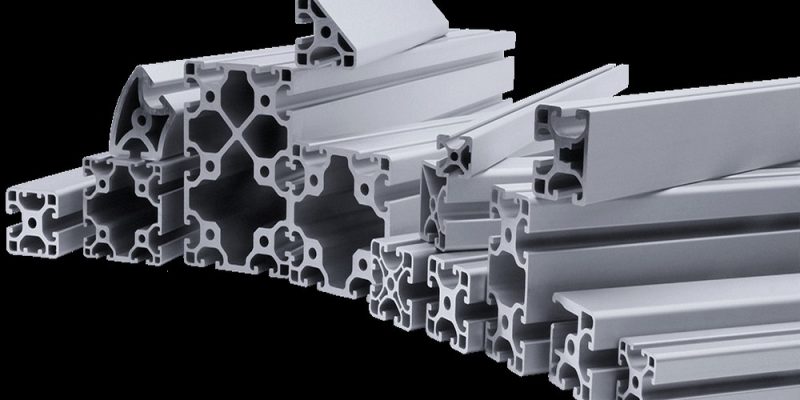
T-slot aluminium profile is the structural backbone of modular industrial construction across manufacturing, automation, and engineering environments worldwide. If you have seen the silver or grey framing used for workstations, machine guards, conveyor frames, laboratory fixtures, and equipment enclosures in industrial settings, you have been looking at T-slot aluminium profile. Despite its widespread use, the underlying system is often less well understood than the applications it enables. This article explains what T-slot profile is, how the system works, and why it has become the default construction method for modular industrial structures.
What T-Slot Profile Is
T-slot aluminium profile is an extruded aluminium section with one or more T-shaped channels running along the length of each face. These channels, known as T-slots, accept a range of specialised fasteners, nuts, and brackets that can be inserted and positioned anywhere along the profile length without drilling. The combination of precision-extruded profiles and a comprehensive range of mechanical connectors makes it possible to build, modify, and extend structures without any welding, grinding, or specialist fabrication.
The profile sections are produced by forcing aluminium alloy, typically 6063 grade for its combination of strength, workability, and surface finish quality, through a shaped die. The resulting extrusion is cut to length, typically anodised for surface protection and appearance, and supplied either as standard lengths or cut to specification. A wide selection of T-slot aluminium profiles in a range of section sizes and configurations is available from UK specialists for both standard and custom industrial applications.
Profile Series Sizes
T-slot profiles are categorised by series, which refers to the nominal slot width and typically the profile face dimension. The most commonly encountered series in UK industrial applications are:
- 20mm series: lightweight profiles suited to light-duty frames, instrument enclosures, and small fixtures where load requirements are modest
- 30mm series: a versatile mid-range option used for benching, shelving, and medium-duty structures
- 40mm and 45mm series: the workhorse of industrial framing, covering the majority of workstation, guarding, and conveyor frame applications across UK manufacturing
- 60mm and 80mm series: heavy-duty sections for larger structures, tall guards, and applications with significant structural load requirements
Profiles within the same series share a common slot dimension and are compatible with the same range of connectors and accessories. Mixing profiles from different series in the same structure requires adapter components and is generally avoided in straightforward builds.
How the Connection System Works
The T-slot connection system relies on T-nuts that slide into the slot channels and accept standard metric bolts. Corner brackets, angle connectors, pivot joints, and end caps all use the same T-nut and bolt principle, allowing any fitting to be positioned and repositioned anywhere along the profile length. This infinite adjustability along the slot is what makes the system so flexible: positions do not need to be pre-drilled or predefined, and changes can be made in situ without modifying the profile itself.
End connections, where two profiles are joined end-to-end or at right angles through the profile face rather than via a bracket on the slot, use internal anchor fasteners that engage with the profile bore, pulling the joint face-to-face with high clamping force. These connections produce a rigid, load-bearing joint that forms the primary structural connection in most frame builds.
Anodising and Surface Finish
Most industrial T-slot profiles are supplied in a natural silver anodised finish, which provides a hard, corrosion resistant surface that is attractive, cleanable, and resistant to the scratching and marking that occurs in industrial environments. Black anodised profiles are widely available for applications where aesthetics matter, such as laboratory fixtures, display structures, and technical furniture. The anodising process is integral to the aluminium surface rather than an applied coating, meaning it does not chip, peel, or require repainting over the life of the structure.
Frequently Asked Questions
Can T-slot profiles from different manufacturers be used together?
Profiles from different manufacturers that share the same nominal slot width and series dimensions are generally compatible at the connector level, but dimensional tolerances can vary slightly and compatibility should be confirmed before mixing products in the same structural assembly.
What alloy grade is typically used for industrial T-slot aluminium profile?
6063 alloy is the most commonly used grade for extruded industrial profile, offering a good combination of structural strength (typically T5 or T6 temper), good surface finish for anodising, and excellent extrudability for consistent complex cross-sections.
Can T-slot profiles be cut to custom lengths on site?
Yes, profiles can be cut with a standard mitre saw or cold saw using an aluminium-specific blade; profiles are typically supplied in standard stock lengths or pre-cut to specified dimensions by the supplier before delivery.
Is T-slot aluminium profile suitable for outdoor use?
Anodised aluminium profile has good outdoor corrosion resistance, but the connector hardware, which is typically steel, may require consideration in persistently wet or exposed environments; stainless steel fasteners are available for applications requiring improved corrosion resistance throughout.
Final Thoughts
T-slot aluminium profile has earned its dominant position in modular industrial construction through a combination of precision manufacturing, a comprehensive and versatile connection system, and an inherent adaptability that no competing construction method can match for the vast majority of industrial framing applications. Understanding the system from the profile series through to the connection principles makes it significantly easier to specify and build effectively.
For engineers, production managers, and contractors sourcing T-slot profile and accessories for industrial projects, a specialist in aluminium profile extrusion systems and components provides the product range, technical guidance, and cutting services needed to realise any build efficiently.







Comments